Welcome to Fair Indigo
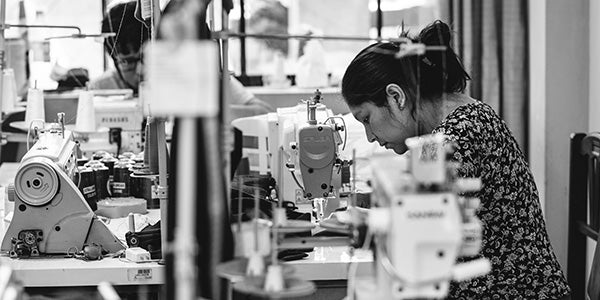
We are a new clothing company with a different way of doing business. With years of experience working for major clothing brands, a small group of us left our jobs determined to pioneer a change in the apparel industry. We wanted to create stylish, high-quality clothes while paying a fair and meaningful wage to the people who produce them. It’s a concept known as “fair trade” and it means we put people first. We handpicked the best, most ethical factories around the globe and presented them with a new concept: paying workers a fair wage, not just a minimum one. We designed beautiful, well-made clothing and accessories for women and men. And whether creating timeless cashmere sweaters or great-fitting tees, we made sure that the workers who cut every pattern and sew every seam are rewarded for their skill and hard work. Instead of driving costs down, we’re trying to lift people up.
We are headquartered in the suburbs of Madison, Wisconsin and whether you shop with us through the catalog, at fairindigo.com or in our store at Hilldale Mall in Madison, we are committed to providing you with great customer service. Everything we sell is backed by an unconditional guarantee: if you are not completely satisfied with any item, at any time, for any reason, we will gladly exchange it for another or refund the purchase price.
If you have any questions, feel free to contact us. We asked ourselves many of the questions below when we started Fair Indigo. We think you might be as interested in the answers as we were.
What is fair trade?
Quite simply, fair trade means that producers are paid fair prices for the products they produce, instead of the minimum prices that the marketplace will allow, as is the case in the mainstream market today.
What does “fair” mean? Who defines it?
While there is no universally accepted measuring stick for what a fair price or a fair wage is, it is generally accepted that farmers or workers earning a fair price or wage are able to live relatively comfortable lives within the context of their local area. This means enough money for housing, a generous amount of food, health care, education for children, and some disposable income.
What types of fair trade products are available for purchase?
Traditionally, fair trade has been limited to commodities such as coffee, tea, fruits, and cotton. Fair trade coffee has become especially popular in Europe, and recently has made significant gains in the United States.
Why has fair trade been limited mainly to commodities?
Commodities like coffee and fruits offer a very simple economic model. They are traded in commodity markets daily, resulting in a “market price.” Importers can purposely choose to pay farmers more than this going market price.
Manufactured goods like clothing are much more complicated because components often come from literally dozens of sources. Also, wages, labor laws, and factory conditions are much more difficult to monitor compared to commodity prices.
Who determines if a product is worthy of being called “fair trade”?
Currently in the United States, the only organization that certifies fair trade products is TransFair USA (one of over twenty members of the worldwide Fair Trade Labeling Organizations International (FLO)). TransFair USA currently limits its certification to coffee, tea, vanilla, and Select fruits.
What is Fair Indigo doing?
Fair Indigo is pioneering the fair trade clothing business. Though no independent organization will certify fair trade apparel due to its complexities, we believe the best way to move fair trade clothing forward is to start at the cutting and sewing facilities where the vast majority of human labor is employed to make a garment.
We will therefore guarantee that every employee who makes our clothing is paid a fair wage, not just a legal minimum wage, as is the benchmark in the industry.
How can you be sure that your clothing is fair trade?
We do several things to insure this.
First, we search the world for worker-owned cooperatives. There is no better way to insure fair wages than to let the employees set their own prices. We believe highly in the co-op model and will continue to seek them out wherever possible.
Second, where cooperatives are not available, we search for factory owners who share our values. This is a long, arduous process that involves much research, interviews, payroll audits, and personal visits by the owners of Fair Indigo. The factories we find are typically family-owned and managed, and always stand out from the other factories in the area because of their higher wages and generous benefits.
Third, Fair Indigo owners personally visit on a regular basis every single factory where products with our label are made to ensure compliance with our standards. During these visits we also meet with the workers whose stories we tell in our catalogs and website.
Fourth, while we believe highly in the value of building a personal relationship with each of our co-ops and factories, our policy is trust, but verify and we use a third party independent auditor to conduct scheduled and surprise visits. During these visits, payroll records are vigorously reviewed, employees are interviewed at length, and health and safety conditions are recorded. Our non-profit auditor, Verité uses an especially stringent employee interviewing technique that includes spending time in the communities where our facilities are located where they can get candid input from the workers in a safe environment outside the workplace.
Fifth, we will continue consulting with TransFair USA, the only independent third party certifier of fair trade goods in the U.S., and look forward to the establishment of fair trade certification standards for apparel.
What is a worker-owned cooperative?
In most manufacturing facilities, there are workers and owners. But in a cooperative, the workers are the owners. This means they make all the decisions—and share all the profits generated by their business. We believe this is the best model for fair trade and will continue to seek out cooperatives who can meet our stringent quality standards.
How do you determine what a “fair” wage is?
The factories we are working with are paying wages that are significantly higher than the wages required by law or convention in the local areas. While there isn’t yet a one-size-fits-all fair wage formula, Fair Indigo is sponsoring the Fair Wage Guide from the World of Good Development Organization (www.fairtradecalculator.org) to help determine living wages in each of our locations. We are also working to extend the Wage Guide beyond home-based artisans to incorporate factory-based workers.
Who is your independent auditor?
Verite', an award-winning, non-profit independent auditor based in Amherst, Massachussets conducts all of our third party audits of wages and working conditions. You can learn more about Verité at www.verite.org.
If you are paying workers higher wages, why are your prices comparable to other US clothing brands?
If done carefully, fair trade does not have to cost more. While a bigger share of the clothing you buy from us goes directly to the worker, we can hold the other costs down in several ways. First, we use worker-owned cooperatives wherever we can. This eliminates layers of overhead since worker and owner are one and the same. Second, wherever possible we work directly with each of our non co-op factories, eliminating the need for middlemen. And finally, unlike most clothing brands, we do not spend huge sums on advertising, instead relying on you, our customers, to spread the word about Fair Indigo.
Other clothing brands advertise their ethical sourcing and social responsibility policies. How are you different?
The fine print on most of these ethical sourcing policies concerning wages is that “all local minimum wage laws are followed.” Fair Indigo does not view obeying minimum wage laws as fair trade. Minimum wages are definitely not enough to live a decent life in the majority of places. Our factories all exceed the law in spades, at a minimum with higher wages, and usually with many other generous benefits. In our world travels, we hold up wages as our #1 criterion in sourcing decisions. For other companies, if it shows up at all, it is well down their list.
Are your factory workers all union represented?
No. While we certainly support the right of workers to form unions, we consider unions as one way to achieve fair wages. Worker-owned co-ops, enlightened management and government regulation are other methods, each with their own strengths and weaknesses. Our focus is on workers earning fair wages and living comfortable lives. We tend to be agnostic on the methods used to get there.
Some of your products are made in China. How can you call these products fair trade? Isn’t China known for sweatshops?
There are many bad factories in China. We have seen them and the criticisms of them are valid. But after years of visiting, interviewing, auditing, and re-auditing, we found there are some outstanding factories too, where workers are truly being lifted up out of their former poverty. We do not believe it is moral to penalize these workers nor their generous factory owners simply because they happen to live in one country. We believe the most effective way to change the apparel business in China is by rewarding the family-run factories that are shining examples of what it could be, and encouraging other clothing retailers to follow us. To ensure compliance with our standards, in addition to the rigorous auditing by Verité that we regularly conduct with all our factories, a Fair Indigo representative is personally present during our production times to verify that there is no "outsourcing" to lesser factories—a common method used in China to circumvent auditing standards.
Are your clothes made by hand?
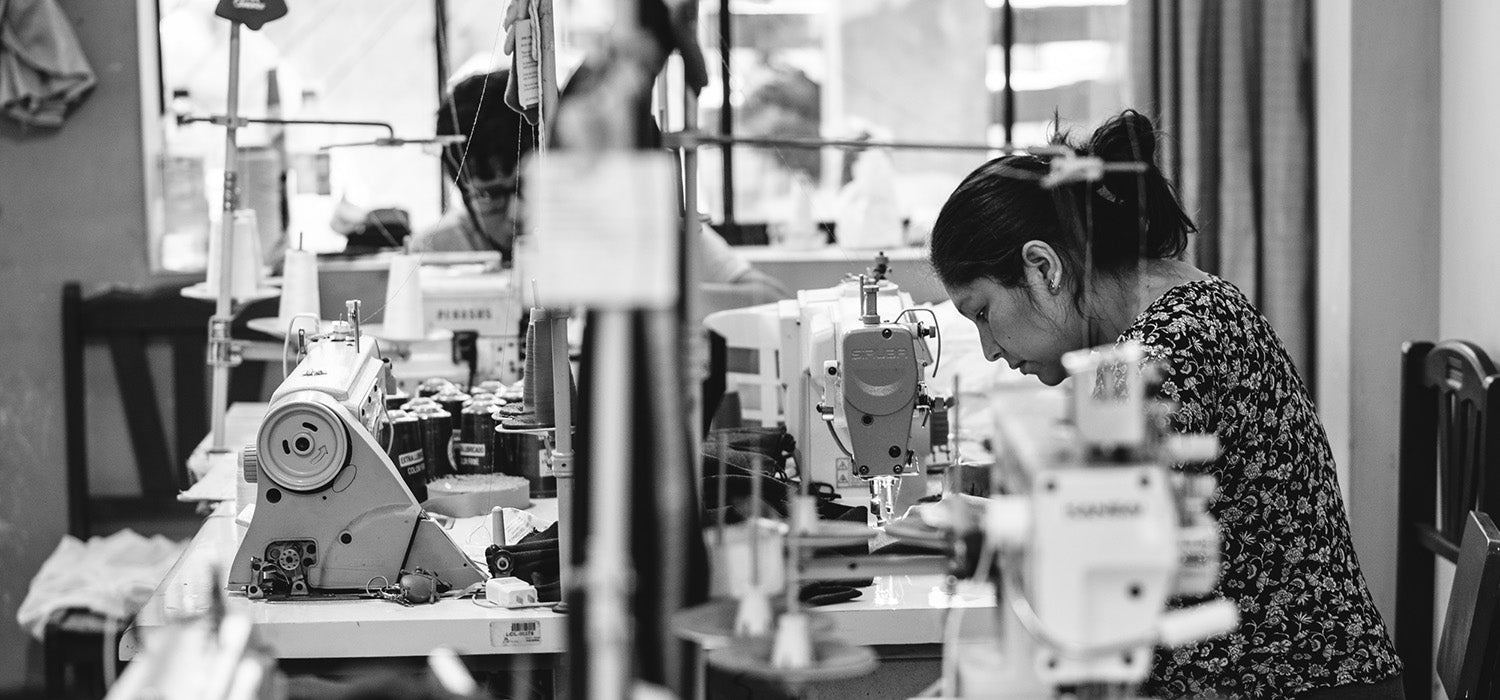
Some of our products are made by hand, one at a time, but the majority of apparel items are made using modern cutting and sewing machinery. Our goal is to reward both types of production. To truly make a difference in the apparel industry, we believe mass production fair trade facilities need to be in the mix. In the low-cost-at-any-cost global economy, creating larger markets for hand-made crafts are certainly part of the solution, but we highly believe ethical mass manufacturing can impact more lives more quickly.
Do you make any of your products in the USA? Why not more or all?
A few of our products are made in the US—such as our Queen B spa products, our Fox River socks and our organic denim which is woven in the United States using US - grown cotton—and we are always searching for more sources. Our sourcing decisions are simple: we search for places that pay the best wages in the local context and can produce the quality and quantities that we need to operate a premier clothing brand. Many of the products we offer do not have production options for us within the United States, as the industry has largely moved offshore.
Do your products use certified fair trade cotton?
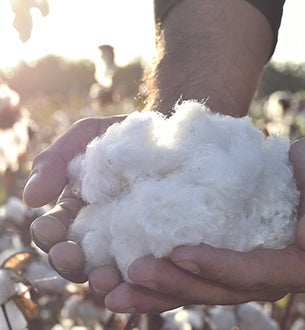
We are currently working on some products that will incorporate fair trade cotton, though currently this is only certified in Europe. While we applaud other companies for focusing on cotton farmers, we are first and foremost focusing on garment workers since we believe this is where we can make the biggest impact.
Is your clothing organic or eco-friendly?
Our denim line is all organic, our fleece is a blend of 50% recycled polyester and we are working on designs that incoporate organic cotton that is also certified fair trade. Environmental caretaking is a component of both our clothing design and facility screening processes. While we strive for eco-friendly products, our main focus at Fair Indigo is on wages of the workers. We salute other companies in the industry who are driving change by focusing on green products and we will join them in doing so as part of our fair trade mission, but continue to focus first on the worker.
What practices do you employ to support the environment?
We do several things in addition to maximizing our reduce/reuse/recycle practices in our office and warehouse. The first step is partnering with facilities that share our respect for the environment and carefully follow or exceed the regulations of their countries. Second, we use 30% post-consumer waste and paper certified for sustainability in our catalogs. Third, we have formed a green partnership with our fair trade coffee supplier, Just Coffee, in Madison, Wisconsin. Rather than traditional recycling of shipping cartons we receive from our suppliers, we donate our cartons to Just Coffee who uses them to ship bulk coffee around the country. And finally we are using environmentally responsible building materials like bamboo floors and hangers, and recycled metal and glass in our retail store.
|